
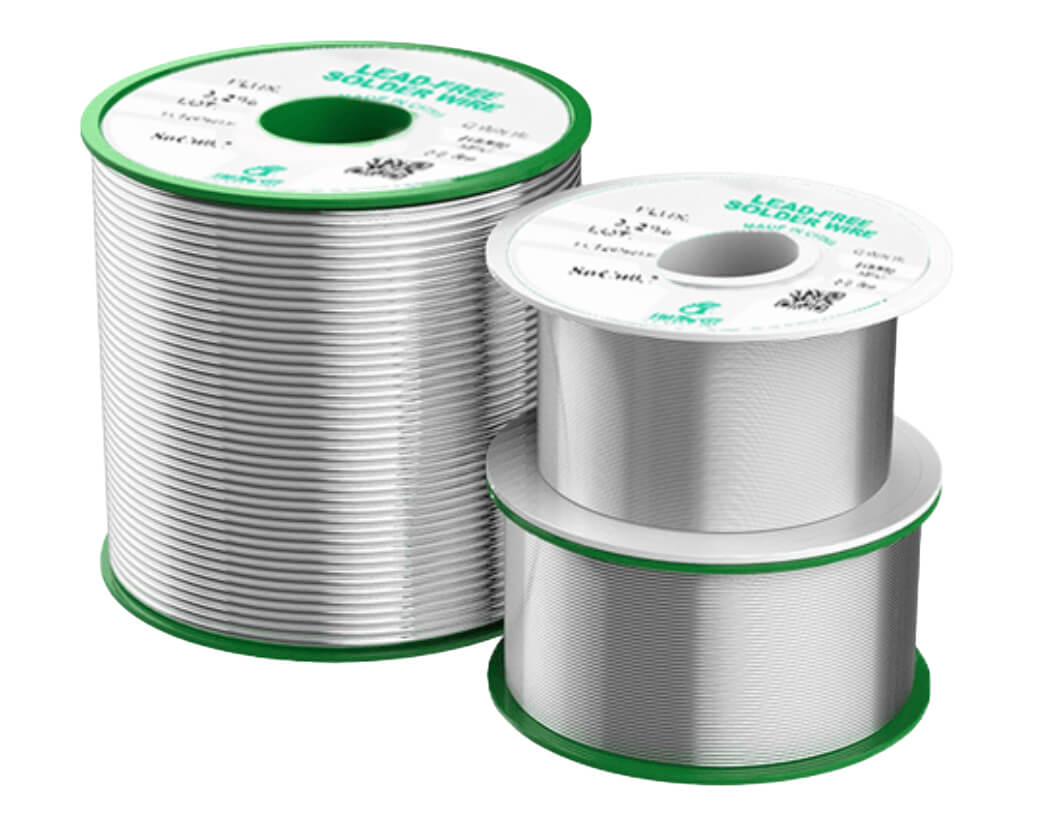
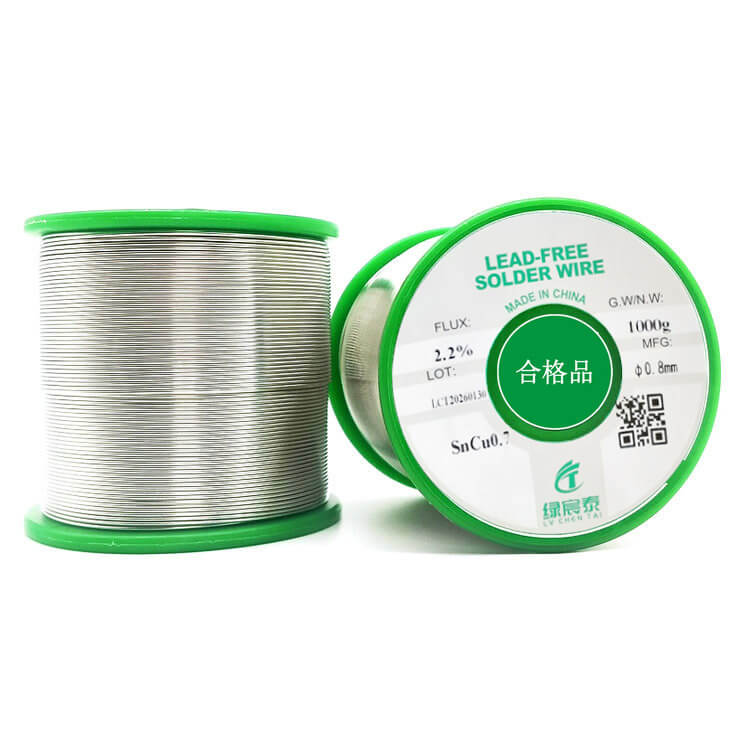


Different application scenarios of solder paste and tin bars
Still deciding? Get samples first, Contact US !
View similar products
- Description
-
Product Description
Specification
In-depth analysis of the differentiation characteristics and application scenarios of solder paste and solder strip
In the soldering process of electronic manufacturing, solder paste and solder strips are like two "craftsmen" with their own strengths, jointly supporting the circuit connection of the circuit board. Although both can complete the welding of electronic components and can be divided into two major systems according to environmental protection requirements, there are significant differences in metal composition, chemical composition, physical properties, operation methods and applicable fields. A deep understanding of these differences is crucial for selecting suitable soldering materials, optimizing production processes, and improving product quality in the electronics manufacturing industry. This article will analyze the differences between the two from a multi-dimensional system, and provide a comprehensive reference for the industry based on practical application cases.
1. The intuitive difference between physical form and packaging method
The external difference between solder paste and solder strip is the most intuitive sign to distinguish the two, which not only determines their storage method, but also affects the subsequent operation convenience and process adaptability.
(1) Solder paste: the precise characteristics of paste fluid
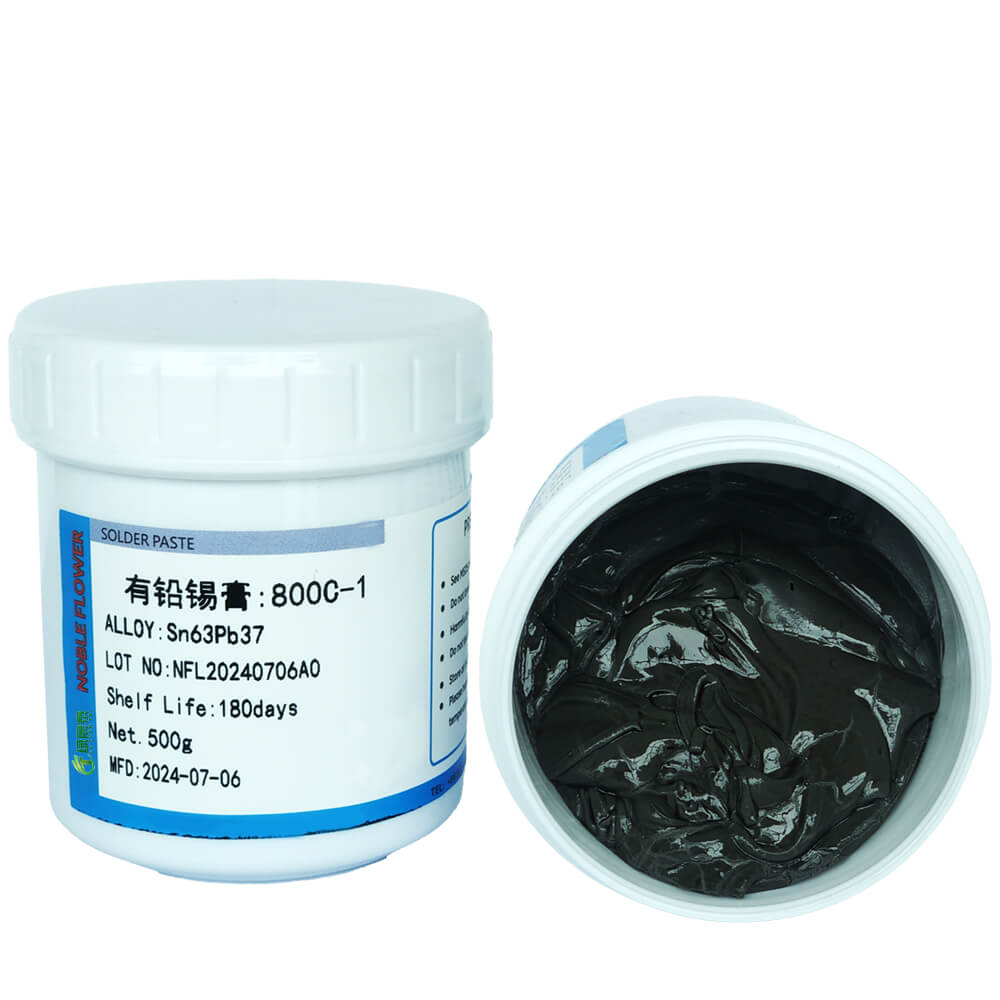
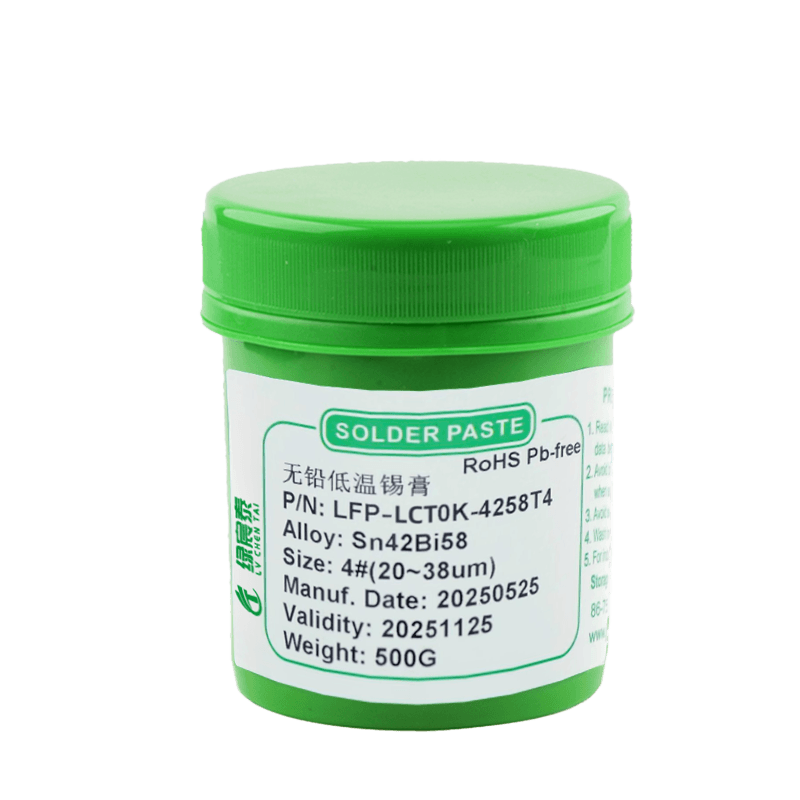
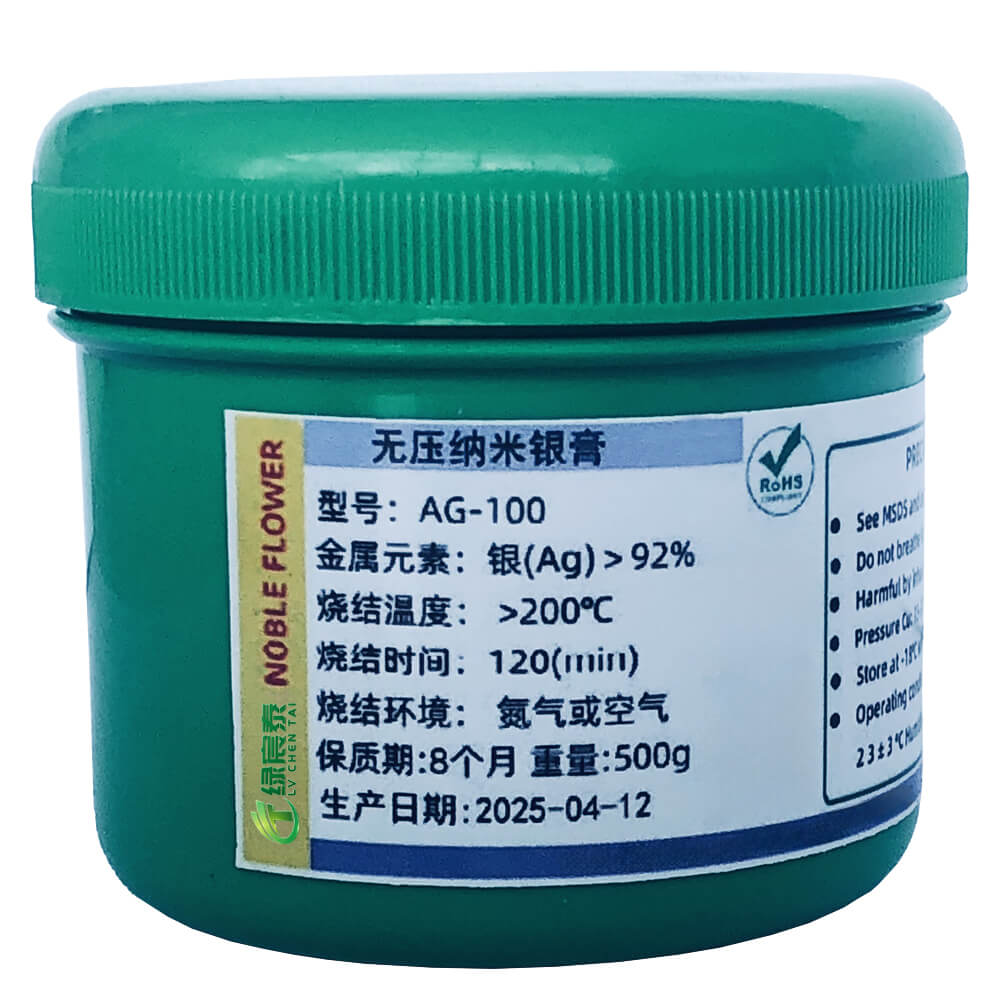
The solder paste has a unique paste-like form, which combines viscosity and fluidity, which allows it to adhere tightly to the pads of electronic components, even in tilted or vibrating environments. Its appearance color is mostly gray or dark gray, which is determined by the optical properties of the internal tin powder particles mixed with the flux evenly.
In order to ensure the activity and stability of the solder paste, it is usually packaged in needle copper cans with strong sealing, and the common specification is 500 grams / can. This packaging design not only effectively isolates air and moisture, prevents flux volatilization and solder oxidation, but also facilitates quantitative access with automated printing equipment. During storage, solder paste is extremely sensitive to ambient temperature, with 0-10°C refrigeration being the norm and precise temperature control of 5-7°C to maximize its shelf life (typically 6 months). If stored at room temperature, flux activity attenuation, tin powder agglomeration and other problems may occur within 3 months, which directly affects the soldering effect.
(2) Solder strip: the regular attribute of solid strip
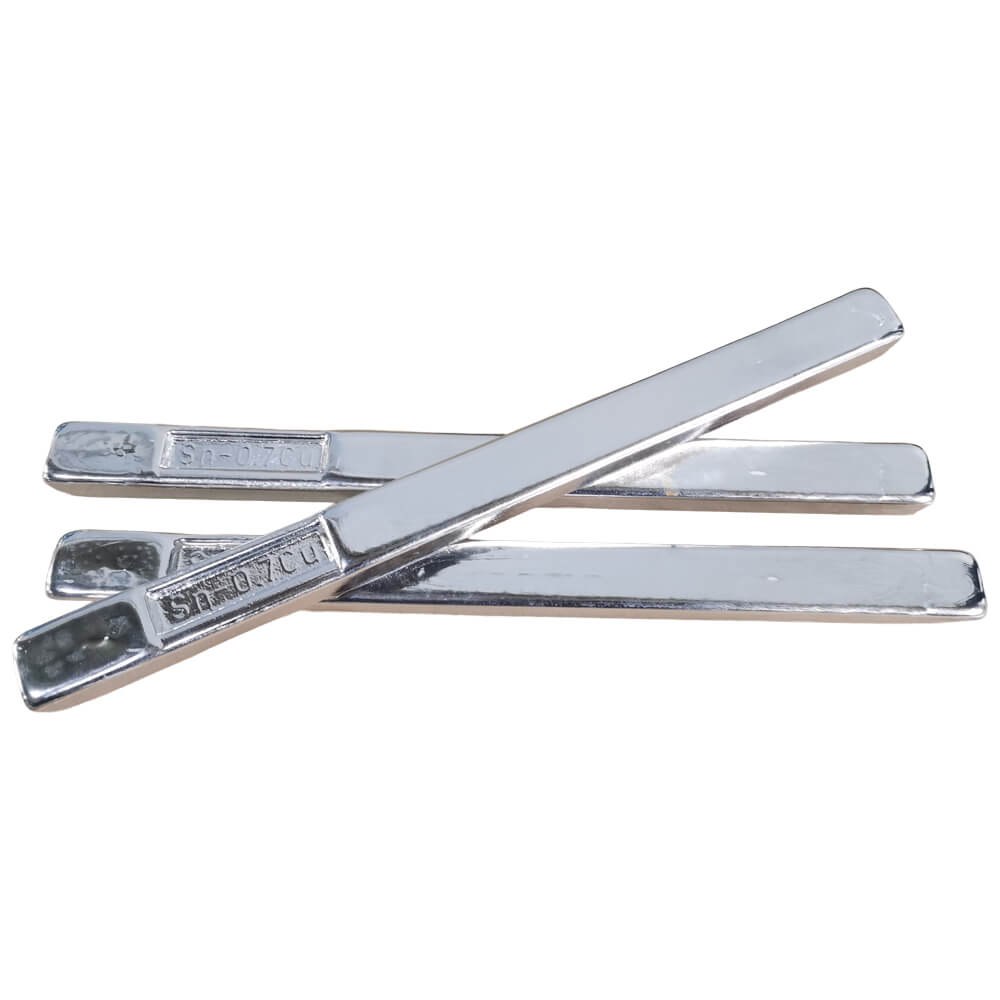
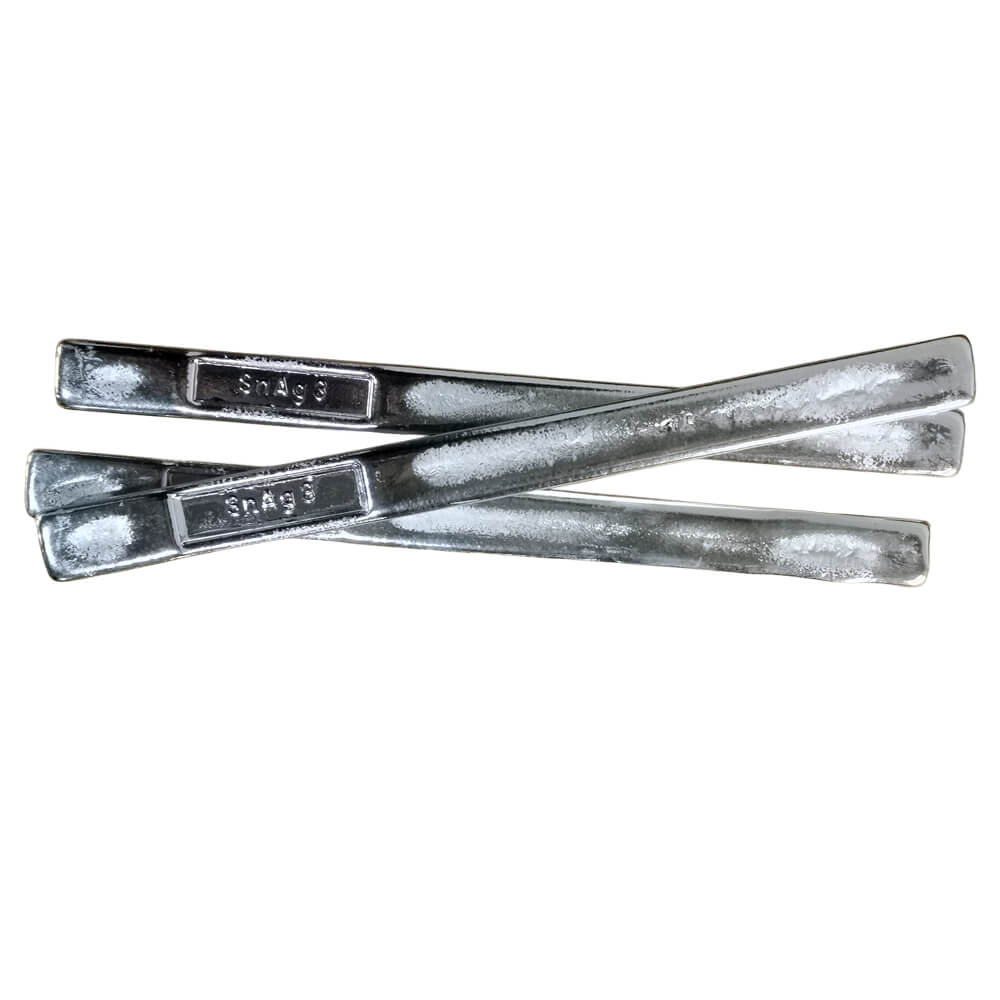
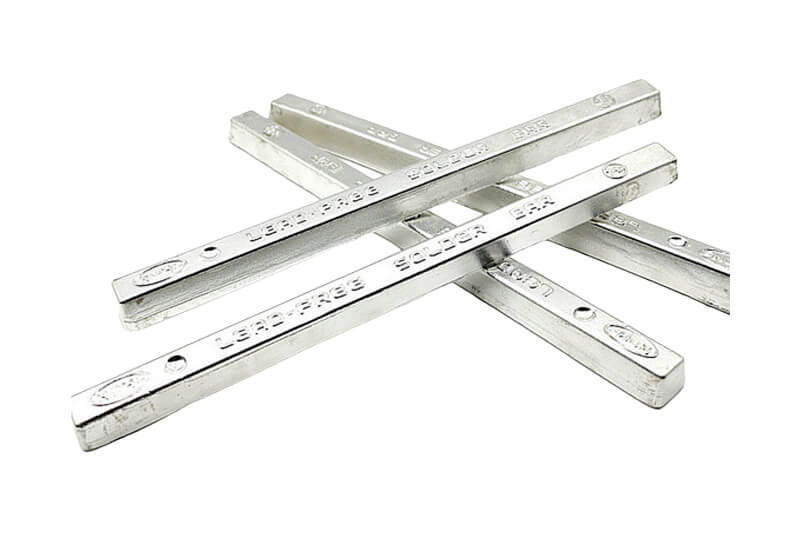
The solder strip is presented as a regular long strip solid, commonly cylindrical and flat, with clear industry standards for length and diameter (or thickness), for example, the diameter of the standard cylindrical solder strip is mostly 10-15mm, and the length is between 300-500mm. Its surface is smooth and bright, showing the characteristic silvery-white luster of metallic tin, and this regular shape makes it easy to handle and store in bulk.
In terms of packaging method, the solder strips are mainly packed in boxes, and the net weight of each box is divided into two mainstream specifications: 20kg and 25kg, which is more suitable for material replenishment in large-scale production scenarios. Because it is a solid metal, the storage conditions of solder strips are relatively loose, and they can be stored for a long time in a dry and ventilated room temperature environment, without special temperature control, only need to avoid contact with corrosive substances to prevent surface oxidation and rust.
2. The essential difference between chemical composition and composition
The composition of the composition is the core source of the difference in the performance of solder paste and solder strip, and different chemical compositions determine their reaction mechanism, temperature requirements, and final solder joint quality during the soldering process.
(1) Solder paste: the synergy of the composite system
Solder paste is a complex composite material composed of solder powder, flux, and a small amount of functional additives. Among them, the proportion of solder powder is usually 85%-90%, and its particle size varies between a few microns and tens of microns depending on the application scenario (such as 5# powder for precision soldering has a particle size of 15-25μm), and the purity requirements are extremely high, generally reaching more than 99.9%, and the impurity content needs to be controlled below 0.01% to avoid affecting the conductivity and mechanical strength of the solder joint.
Flux is an indispensable key component in solder paste, accounting for about 8%-12%, and its main functions include three aspects: first, to remove the oxide film on the soldering surface, through the active agent and metal oxides to form substances soluble in flux, to ensure the direct contact between the tin powder and the pad; second, reduce the welding temperature, by changing the tension of the metal surface, so that the tin powder can melt and spread at a lower temperature; The third is to prevent secondary oxidation during the welding process, forming a protective film on the surface of the solder joint until the welding is completed. Common flux components include rosin, organic acids, amine compounds, etc., and different ratios of fluxes make the solder paste suitable for different soldering processes and metal materials.
(2) Solder rod: a single characteristic of pure metal alloys
The composition of solder strips is relatively simple, mainly composed of tin-based alloys, and does not contain flux. The traditional lead solder strip is mainly composed of tin (Sn) and lead (Pb), and the most classic ratio is 63% tin to 37% lead, and the solder rod has the lowest eutectic temperature (183°C), good fluidity during soldering, and bright and full solder joints.
With the increasingly stringent environmental regulations, lead-free solder strips are widely used, and their composition systems are more diverse, mainly including Sn-Ag-Cu (tin-silver-copper), Sn-Cu (tin-copper), Sn-Ag (tin-silver) and other alloys. For example, Sn-Ag-Cu alloy (containing 3.0% silver, 0.5% copper, and the rest is tin) has a melting point of about 217-225°C, which has excellent mechanical strength and high-temperature resistance, and is suitable for automotive electronics and industrial control fields with high reliability requirements. Regardless of the composition of the solder strip, its production process undergoes a rigorous melting and forming process to ensure uniform internal composition and no bubbles or impurities.
3. Significant differences between operation methods and technological flows
The use of solder paste and solder strips is closely related to their morphology and compositional characteristics, forming completely different operating processes, which directly affect production efficiency and soldering accuracy.
(1) Automatic soldering process of solder paste
The process of using solder paste is highly dependent on automated equipment and is the core material of surface mount technology (SMT). Typical processes include:
- Printing stage: The solder paste is
accurately applied to the pad of the circuit board through the stencil
printing machine, and the shape and size of the opening holes of the
stencil are customized according to the pad design to ensure that the
printing amount and position accuracy of the solder paste are controlled
within ±0.05mm.
<!--[if !supportLists]-->2. <!--[endif]-->SMT stage: The placement machine is used to accurately place electronic components on the pads coated with solder paste, and the stickiness of the solder paste plays a key role in temporarily fixing the components.
<!--[if !supportLists]-->3. <!--[endif]-->Reflow Stage: The board enters the reflow oven and heats up according to a preset temperature profile (usually including four stages: preheating, constant temperature, reflow, and cooling). In the reflow stage, the flux in the solder paste first volatilizes and removes the oxide film, and then the tin powder melts to form a liquid alloy, which fills the gap between the component pins and the pad under surface tension, and forms a strong solder joint after cooling.
For example, the reflux temperature of lead-free solder paste is usually 30-50°C higher than that of leaded solder paste, if the temperature is too high, it will cause the flux to burn and carbonize, forming a black residue; If the temperature is too low, it will cause insufficient melting of tin powder and false welding.
(2) Manual and semi-automatic operation of solder strips
The use of solder strips relies more on manual operation or semi-automated equipment, and is commonly used in through-hole insertion technology (THT) and maintenance scenarios. The basic operation steps are:
- Heating preparation: Heat the
soldering iron or solder furnace above the melting point of the solder
strip (for example, the melting point of 63/37 leaded solder strips is
183°C, and the lead-free tin silver copper solder rods need to be heated
to above 220°C).
<!--[if !supportLists]-->2. <!--[endif]-->Flux treatment: Since the solder strip does not contain flux, it is necessary to apply flux (such as rosin alcohol solution) to the area to be soldered before soldering, or use a solder strip with flux (with rosin in the core).
<!--[if !supportLists]-->3. <!--[endif]-->Soldering operation: Dip a small amount of molten solder strips with a heated soldering iron to evenly cover the connection between the component pins and the pads, and remove the soldering iron after the solder is fully moistened and form a smooth solder joint, and let it cool and solidify naturally.
In large-scale production, solder strips can also be applied to the wave soldering process: the board is pre-coated with flux and preheated, and then the solder surface of the circuit board is contacted with the molten solder strip liquid (solder liquid in the tin furnace), and the solder is filled with the through holes and pads through the impact force of the wave to complete the soldering. This process requires extremely high purity of the solder strip, and the high impurity content will lead to unstable peaks and affect the quality of the solder joints.
4. Comparative analysis of welding effect and quality characteristics
The differences in soldering effects between solder paste and solder rods directly determine their applicability in different quality requirements, which are reflected in various aspects such as solder joint morphology, strength, consistency, and subsequent processing.
(1) The refined soldering performance of solder paste
The solder joints after solder paste soldering are characterized by fine and uniform characteristics, thanks to the high-precision control of their printing process. In surface mount technology, solder paste can accurately fill tiny gaps below 0.3mm, resulting in clear solder joint contours and even solder distribution, with almost no burrs or excess solder, making it particularly suitable for high-density assembly of microelectronic devices such as mobile phones and tablets.
Since solder paste contains flux, a certain amount of residue will be produced after soldering. If these residues are not removed in time, they can absorb moisture from the air, leading to a decrease in insulation resistance between solder joints and even electrochemical corrosion. Therefore, for products with high reliability requirements, such as medical electronics and aerospace, solder paste must go through a strict cleaning process after soldering, usually using special water-based cleaning agents or solvent-based cleaning agents to ensure that the residue removal rate reaches more than 99%.
(2) High-strength welding advantages of solder strips
The solder joints after soldering the solder strip show a full and smooth shape, the solder is fully filled, and the mechanical strength is high. In manual soldering, experienced operators can form arc-shaped transition solder joints by controlling the amount of solder strip and the temperature of the soldering iron, which has strong resistance to stretching and vibration, and is suitable for soldering key components of electronic equipment (such as power interfaces, connectors, etc.).
The quality of solder bar welding is greatly affected by the technical level of the operator, and if the operation is improper, it is easy to have defects such as insufficient solder joints, virtual welding, and bridging. For example, too little solder strip will lead to insufficient solder joint strength, and too much may cause a short circuit to adjacent solder joints; Too high a soldering iron temperature will oxidize the solder and form a rough solder joint surface; If the temperature is too low, it will cause the solder to not bond firmly with the substrate, and there will be hidden dangers of false soldering. Therefore, when welding with solder strips, the training and skill assessment of operators are particularly important.
5. Accurate division of applicable scenarios and process adaptation
The applicable scenarios of solder paste and solder strips are closely related to their own characteristics, and the correct choice can significantly improve production efficiency, reduce costs, and ensure product quality.
(1) Adaptability of automatic mass production of solder paste
Solder paste is best suited for use in automated production lines such as surface mount technology (SMT) and wave soldering, especially in the manufacture of high-volume electronic circuit boards. For example, in the production line of smartphone motherboards, thousands of circuit boards can be soldered and coated per hour by a solder paste printing machine, and with a high-speed placement machine and reflow soldering oven, the entire production process is fully automated, and the production efficiency is more than 10 times higher than manual soldering.
In addition to mass production, solder paste is also indispensable in delicate soldering scenarios. For example, in the RF module of 5G communication equipment, the pin spacing of components is only 0.2mm, and traditional solder strips cannot complete soldering at all, while solder paste can achieve stable and reliable connections through precision printing and reflow soldering.
(2) Advantages of solder rod manual and maintenance scenarios
Solder strips are more suitable for manual soldering and repair and assembly of small electronic devices. In the after-sales maintenance of electronic products, maintenance personnel need to replace a single faulty component, and the use of solder strips and electric soldering irons can be flexibly operated to accurately control the amount of solder and avoid damage to peripheral components. For example, in the maintenance of TV motherboards, for falling capacitors or resistors, maintenance personnel can quickly complete the repair by manually adding solder strips, without the use of complex automation equipment.
Solder strips also play an important role in the assembly of some large electronic devices. For example, high-power components such as relays and contactors in industrial control cabinets have thicker pins and require more solder to ensure the connection strength.
6. The deep relationship between the production process and material properties
The differences in the production process of solder paste and solder strips have led to their different characteristics in terms of alloy ratio, melting point and operating temperature, which further affect their process suitability.
(1) Differentiated path of production process
The production process of solder paste is complex and precise, mainly including three key links: solder powder preparation, flux preparation, and mixing and stirring. Tin powder is usually prepared by atomization method, which atomizes the molten tin alloy into fine particles through high-pressure inert gas, and then obtains tin powder with a specific particle size through graded screening. flux needs to be mixed with rosin, active agent, solvent, etc. in precise proportions, and degassed to remove air bubbles; Finally, under vacuum or nitrogen protection, the tin powder and flux are mixed and stirred in proportion to form a homogeneous paste-like mixture.
The production process of solder strips is relatively simple, mainly including two steps: melting and casting molding. The metal raw materials are put into the furnace according to the formula ratio and heated to a molten state, and after removing impurities, the liquid alloy is cast into the mold and cooled to form a strip product. This production process makes the solder strip relatively low cost, especially suitable for large-scale production.
(2) Differences in alloy ratio and temperature characteristics
In addition to the common Sn-Pb and Sn-Ag-Cu systems, special alloys such as Sn-Bi and Sn-Zn are also included to meet different soldering temperature requirements. For example, Sn-Bi solder pastes have a melting point as low as 138°C and are suitable for soldering heat-sensitive components such as flexible circuit boards. The melting point of SN-AG-CU solder paste is between 217-225°C, making it suitable for electronic devices operating in high-temperature environments.
The alloy ratio of solder strips is relatively fixed, mainly Sn-Pb and Sn-Ag-Cu. Sn-Pb ratios with lead solder strips are typically 63:37 or 60:40 with melting points of 183°C and 188°C, respectively; Lead-free solder strips are mainly Sn-Ag-Cu (3.0Ag-0.5Cu), with a melting point of about 217°C. This relatively fixed ratio makes the operating temperature range of solder strips relatively narrow, and the process adaptability is relatively limited.
7. Purchasing strategies and industrial application suggestions
In actual production, the selection of solder paste and solder strip needs to comprehensively consider equipment conditions, process requirements, product quality standards and other factors, and formulate a scientific purchasing strategy.
(1) Accurate selection based on equipment and process
If the enterprise is equipped with SMT placement machines, reflow soldering ovens and other automation equipment, and uses surface mount technology to produce high-density and miniaturized electronic products, solder paste should be preferred; If manual soldering or wave soldering equipment is mainly used, and the products produced are mainly through-hole cartridge components, such as power adapters, industrial control boards, etc., it is more suitable to choose solder strips.
For example, a smartphone manufacturer's motherboard production line uses SMT technology, equipped with high-precision printing machines and reflow soldering ovens, so it chooses 5# lead-free solder paste (SN-AG-CU system) to meet the soldering needs of 0.4mm pitch BGA chips; A small electronic repair shop mainly repairs the motherboard of home appliances such as TVs and washing machines, and is equipped with only electric soldering irons and heat guns, so it chooses 63/37 lead solder strips to take into account the soldering effect and cost.
(2) Consideration of environmental protection requirements and quality standards
In regions with strict environmental requirements (such as the European Union, China, etc.), lead-free solder paste or lead-free solder strips should be preferred to meet the requirements of environmental directives such as RoHS. For medical electronics, aerospace and other fields with extremely high requirements for product quality, in addition to choosing lead-free products, it is also necessary to pay attention to the purity, solder joint strength, aging resistance and other indicators of solder materials, and if necessary, the supplier should be required to provide third-party test reports.
As a well-known enterprise in the industry, Suzhou Luchentai solder paste manufacturers provide a full range of solder products including lead-free solder paste, lead-free solder strips, solder wires, etc., and their products have undergone strict quality control to meet the needs of different industries. When purchasing, enterprises can consult the technical support of professional suppliers according to their specific situation and choose the most suitable welding materials.
8. Summary
As two core materials in the field of electronic soldering, solder paste and solder strips play an irreplaceable role in different scenarios with their unique characteristics. With its advantages of refinement and automation, solder paste has become the first choice for high-density and large-scale electronic manufacturing; Solder strips, with their flexible operation and high strength, occupy an important position in the field of manual welding and maintenance.
In practical applications, enterprises should accurately select solder materials based on their own production equipment, process requirements, product types and environmental protection standards to maximize production efficiency and product quality. With the development of the electronics manufacturing industry in the direction of miniaturization, intelligence and environmental protection, the technology of solder paste and solder strip is also constantly innovating, and new products that are more efficient, more environmentally friendly and more suitable for advanced processes will appear in the future, providing strong support for the sustainable development of the electronics industry.
Product Images And Product Chart
- Printing stage: The solder paste is
accurately applied to the pad of the circuit board through the stencil
printing machine, and the shape and size of the opening holes of the
stencil are customized according to the pad design to ensure that the
printing amount and position accuracy of the solder paste are controlled
within ±0.05mm.
Different application scenarios of solder paste and tin bars
Still deciding? Get samples first, Contact US !
Products Category
Inquire Now
Note: Please leave your email address, our professionals will contact you as soon as possible!